Marketing for World Cup 2026: What Houston Businesses Need to Do Before June 12
Houston has hosted major events before. The Super Bowl. The Final Four. The Houston Livestock Show and Rodeo. Each one brought a temporary spike in foot traffic, a few weeks of elevated business, and then it was over.
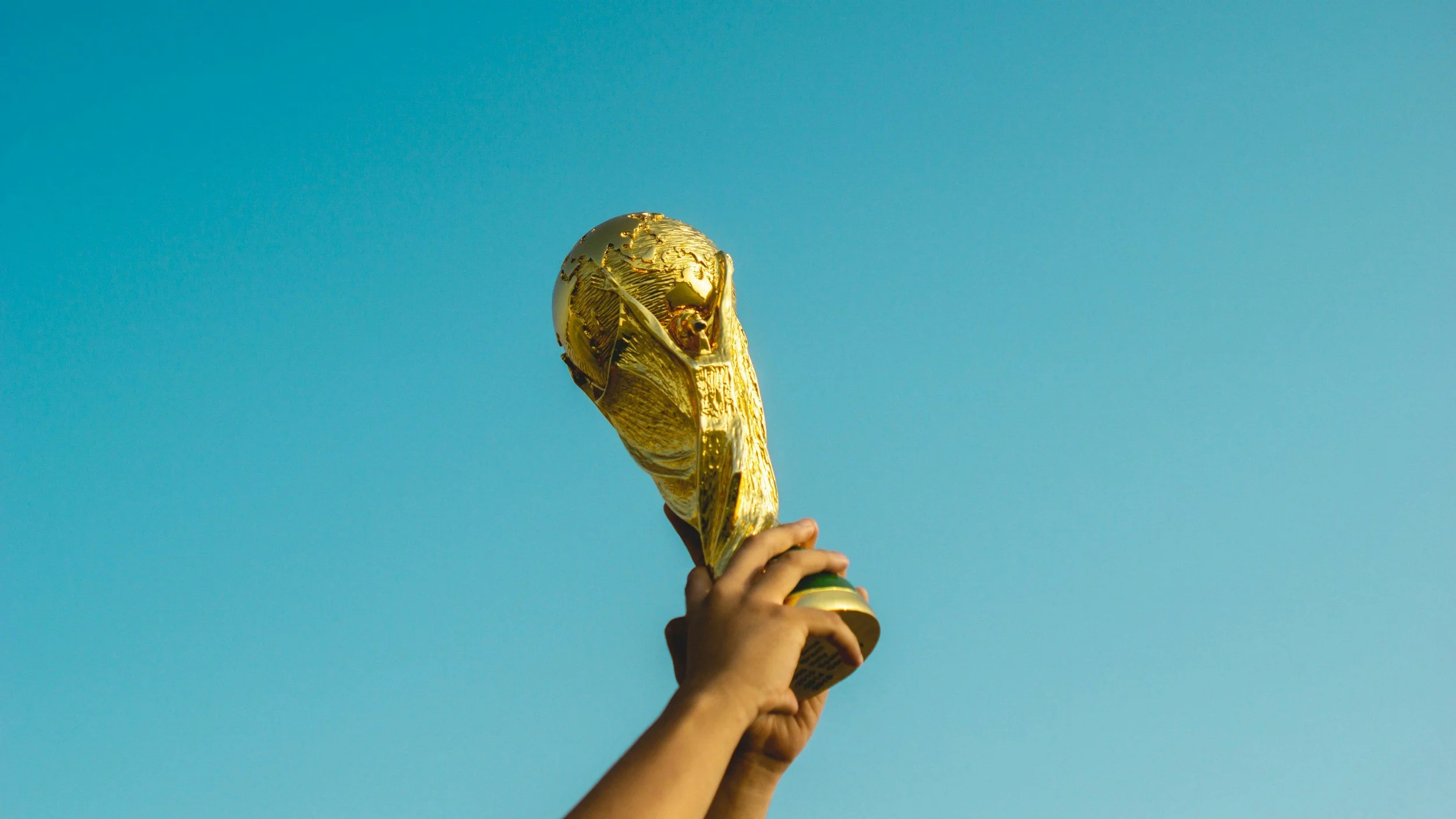
The FIFA World Cup 2026 is not that.
Seven matches at NRG Stadium. Five hundred thousand international tourists. $1.4 billion in projected local economic impact. Thirty-nine days of sustained spending from visitors who flew in from Lisbon, São Paulo, Amsterdam, Mexico City, and Buenos Aires — and who have never been to Houston before and will rely entirely on Google to find every business they interact with.
If you own a business in Houston, this is the marketing question you need to answer right now: when those tourists open Google Maps in June, are they finding you or your competitor?
The answer to that question is not decided in June. It is decided in March.
Why the Timing of World Cup Marketing Matters More Than the Strategy
Most business owners think about marketing for big events the wrong way. They wait until the event is close, then try to run ads, post on social media, or put a sign in the window. That works for local foot traffic. It does not work for international tourists using Google Maps.
Google Maps rankings take 60 to 90 days to build. This is not a shortcut that exists. It is how the algorithm works — Google needs time to evaluate your profile completeness, review velocity, citation consistency, and on-page signals before it promotes your business to the top of the results.
The math is simple. If the first Houston World Cup match is June 12, and you need 90 days to build a Top 3 ranking, the last responsible start date was March 11.
Every week past that date is a week of ranking potential you do not get back. By May, the businesses that started in March are sitting at position 2 or 3, paying nothing per click. The businesses that waited are paying $60 to $80 per click on Google Ads — which is the real-time rate for competitive Houston keywords during a major event — for a fraction of the results.
This is the core of marketing for World Cup 2026: the strategy is not complicated, but the timing is unforgiving.
What 500,000 International Tourists Actually Look Like on Google
When a tourist from Portugal lands at IAH and wants to find a med spa, they do not ask a local. They do not have a Houston friend to call. They open Google Maps and search "med spa near me" or "spa de beleza Houston" and they click the first result that looks credible.
That is the entire buying journey. One search. One click. One booking.
This is fundamentally different from how domestic tourists behave. An American traveling to Houston for the Super Bowl has US brand familiarity, local recommendations from friends, and existing loyalty to national chains. A Brazilian or Dutch tourist has none of that. They are starting from zero, and Google is their only guide.
Which means your Google Maps ranking is your storefront. If you are not in the Top 3, you are effectively closed for the entire tournament.
The verticals where this plays out most directly are med spas, personal injury law firms, luxury real estate, and exotic car rentals. These are high-margin categories where a single World Cup client covers the entire cost of months of marketing investment. A law firm that ranks Top 3 for "personal injury attorney Houston" during a period when 500,000 tourists are driving on unfamiliar roads does not need to run a single ad to have a record summer. A med spa that ranks for "spa de belleza Houston" in front of high-spending visitors from Latin America and Europe can add $40,000 to $120,000 in tournament-window revenue from organic traffic alone.
The businesses that capture that revenue are the ones that started their Google Maps work in February and March.
The Three-Part Marketing Strategy for World Cup 2026
Marketing for World Cup 2026 breaks down into three components. You need all three. Each one builds on the previous.
1. Google Maps Dominance
Your Google Business Profile is the foundation of everything. It determines where you appear when tourists search, how credible you look when they find you, and whether they click your listing or your competitor's.
Most Houston businesses are operating at 60 to 70 percent GBP completion. Full completion — every field filled, every category selected, 20+ photos uploaded, a keyword-rich business description, services listed with prices, Q&A section seeded — is the baseline for Top 3 ranking. Not a guarantee. A baseline.
The second component is reviews. Google uses review count, recency, and response rate as ranking signals. A business with 50 reviews ranked in the last 90 days outranks a business with 200 old reviews that has not had a new one in six months. The review sprint — reaching out personally to every past client with a direct review link, before June — is the highest-leverage action most Houston businesses can take right now.
The target is 50 verified reviews before June 11. That number is achievable for most businesses between now and the tournament. It requires a direct personal ask, a short link, and consistent follow-through. It does not require a budget.
For the full implementation checklist, the World Cup 2026 Houston marketing guide breaks down every step by 90-day, 60-day, and 30-day deadlines.
2. Multilingual Positioning
This is the gap that almost no Houston business has addressed, and it is the most direct path to zero-competition ranking.
The tourists arriving for the World Cup are searching in Portuguese, Spanish, Dutch, and German. A Houston med spa with a Portuguese-language Google Business Profile description, Portuguese GBP posts, and Portuguese service listings is competing against essentially no one for that search traffic. There are no other Houston med spas doing this.
The practical implementation takes less than a day. Write your GBP description and top services in English first. Run them through DeepL or ChatGPT with a prompt that specifies the tourist context and the World Cup. Publish each language version as a separate GBP post. Add a line to your business description that says "Portuguese · Spanish · English spoken." That single line changes your click-through rate for international visitors.
For Houston specifically, Portuguese is the highest-priority language. Portugal plays matches in Houston. Brazil is the largest single source of high-spending World Cup tourists. There is not a meaningful competitor in Houston targeting Portuguese-speaking tourists in any of the four primary verticals.
3. Geofencing and Device ID Capture
Geofencing places a digital boundary around a physical location. When a tourist's device enters that boundary, it is tagged. You can then serve ads to that device for 30 to 60 days after they leave — which means you can reach a tourist who walked past NRG Stadium on June 12 with an ad on June 30, after they have returned to their hotel and are making decisions about how to spend the rest of their time in Houston.
The five zones that matter for Houston are IAH International Arrivals, the NRG Stadium perimeter, the Post Oak luxury hotel corridor, the Galleria and River Oaks shopping zones, and the EaDo Fan Festival footprint.
IAH is the highest-leverage geofence for most verticals. Every international tourist passes through it. Tagging that zone from June 10 forward means your retargeting audience contains every tourist who landed in Houston — before any competitor has reached them and before they have made a single local purchase decision.
Geofencing requires a partner and a budget. The right entry point is $1,500 to $3,000 per month across two or three zones. The deployment timeline matters: devices tagged in early June build into a retargeting pool that pays dividends through the entire 39-day tournament window and beyond.
What This Looks Like by Vertical
Med spas are the single highest-capture vertical for World Cup 2026 in Houston. High-spending visitors from Portugal, the Netherlands, and Brazil have strong interest in aesthetic services. Review count is more important in this vertical than any other — tourists look at review scores before they look at anything else. The med spa World Cup marketing strategy covers the full playbook.
Personal injury law firms benefit from a dynamic that most firms have not considered: 500,000 tourists driving on unfamiliar roads, in a city they do not know, creates a statistically significant increase in accidents. International visitors are unfamiliar with US insurance law, do not know their rights, and need a lawyer immediately. A firm ranked Top 3 for "personal injury lawyer Houston" and "abogado de accidentes Houston" during the tournament window captures cases that would otherwise go to whoever shows up first on Google. The law firm World Cup marketing breakdown has the complete keyword and geofence strategy.
Luxury real estate operates on a longer timeline than the other verticals — the transaction closes after the tournament, not during it. But 40 percent of high-income World Cup tourists explore real estate in host cities during their visit. A Latin American buyer who walks through River Oaks between matches and searches "luxury homes Houston" needs to find your listing on that search, not six weeks later when they are back home and the moment has passed. Device ID retargeting is what bridges that gap. Details at luxury real estate World Cup marketing.
Exotic car rental operators have a narrow window and a very specific buyer profile. Tourists from Brazil, Mexico, and the Netherlands who are traveling without families and staying in premium hotels want to rent interesting cars. The IAH Airport Rental Car Center is the defining geofence for this vertical. The car rental World Cup marketing strategy covers the full approach.
The Cost of Not Acting
Google Ads in Houston will cost $60 to $80 per click in the competitive verticals during June and July. That is not a projection — it is the historical rate for high-intent local searches during major events in US cities.
A business that built organic Top 3 rankings before the tournament pays $0 per click for that same traffic. A business that waited and is running ads in June is spending $25,000 or more to generate a fraction of the results, while the organic businesses capture the majority of the search traffic without spending anything on ads.
The window for building those rankings is effectively closed in mid-March. The work that gets started in April ranks in July. The work that gets started in May ranks in August. The tournament ends in early July.
This is not urgency manufacturing. It is how search ranking timelines work, applied to a fixed event date.
What to Do This Week
If you own a Houston business in one of the target verticals, three things move the needle immediately and cost nothing:
Audit your Google Business Profile today. Open it and document every incomplete field. Categories, services, hours, attributes, photo count, business description. Most businesses find 8 to 12 incomplete items in this audit. Each one is a ranking signal you are currently missing.
Start asking for reviews. Identify your last 20 happy clients or customers. Get your direct GBP review link from your profile. Text each one personally with a one-sentence ask. Not an email. A text. The conversion rate difference is significant.
Write your GBP description in Portuguese and Spanish. Take your current description, run it through DeepL, review it for accuracy, and publish it as a GBP post in each language. Do this today. You will be one of the only businesses in your category in Houston that has done it.
If you want Kizmet to handle the full execution — GBP rebuild, review sprint, multilingual SEO, geofencing deployment, and ranking reports — the services page has the current program options and pricing. We cap at three clients per vertical in Houston. Vertical exclusivity is guaranteed.
The first Houston match is June 12. The work that happens before that date determines who captures the revenue.
Frequently Asked Questions
How long does marketing for World Cup 2026 actually take to show results?
Google Maps rankings take 60 to 90 days to build from the point you start the work. For a June 12 tournament start, that means the effective deadline for starting is mid-March. Paid media (geofencing and Google Ads) shows results within 7 to 14 days but costs significantly more per result than organic rankings.
Do I need a big budget to market my business for World Cup 2026?
The highest-leverage actions — completing your Google Business Profile, running a review sprint, and adding multilingual content — cost nothing except time. Geofencing campaigns start at $1,500 to $3,000 per month. A full-service agency program (GBP, SEO, reviews, multilingual, and geofencing) runs $3,500 to $22,500 depending on scope.
Which Houston businesses will benefit most from World Cup 2026?
The highest-capture verticals are med spas, personal injury law firms, luxury real estate agents, and exotic car rental operators. These are high-margin categories where a single World Cup client can cover the entire cost of the marketing investment. Restaurants and hospitality benefit as well but operate on thinner margins.
What languages should I add to my Google Business Profile for World Cup tourists?
For Houston specifically: Portuguese first (Portugal and Brazil both have significant representation in Houston's match schedule), Spanish second (Mexico, Argentina, and Colombia represent the largest tourist volumes), Dutch third (the Netherlands plays in Houston), and German fourth. Portuguese is the highest-priority uncontested lane — almost no Houston businesses have Portuguese-language profiles.
Is it too late to start marketing for World Cup 2026?
As of March 2026, there is still time to build meaningful rankings before June 12 — but the margin is narrow. Work started in early March can produce Top 5 positioning by the first match week. Work started in April produces rankings in July, after the tournament peak has passed. The review sprint and multilingual content can be deployed this week regardless of where you start.
What is geofencing and do I need it for World Cup?
Geofencing places a digital boundary around a physical location and tags devices that enter it, enabling you to serve ads to those devices for up to 60 days. For World Cup, the highest-value zones are IAH International Arrivals, NRG Stadium perimeter, and the Post Oak luxury hotel corridor. It is not required — organic rankings alone can drive significant revenue — but it amplifies results for businesses with the budget to deploy it.
Kizmet is a Houston-based marketing agency specializing in World Cup 2026 business positioning. We work with med spas, law firms, luxury real estate agents, and car rental operators in Houston. Capacity is limited to 3 clients per vertical. To discuss your business's current Google Maps ranking and what the path to Top 3 looks like, book a free 15-minute strategy call or call 713-257-2923.
